+44 (0) 20 7841 3888
 info@ccsg.co.uk
What Is TARGET? CCSG's Retail Risk Management Platform Explained
Retail shrinkage rarely shows up as one big theft. It shows up as a refund here, a void there, a camera that was never checked, spread across hundreds of stores until the number is too large to ignore. That is the exact problem CCSG built TARGET to solve, and this guide explains what it is, how it works, and why enterprise retailers rely on it.
What Is TARGET?
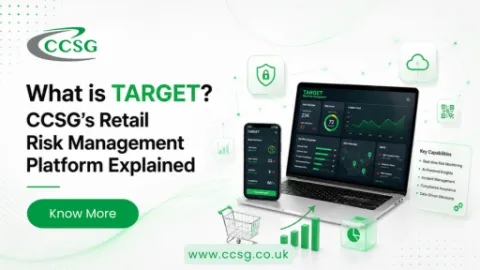
TARGET is CCSG's TARGET retail risk management platform, a manufacturer agnostic video investigation system that connects CCTV, point of sale data, and over 150 built in risk services into one tool. Instead of juggling separate systems for theft, fraud, and compliance, retailers get a single TARGET platform overview that ties everything together.
Built on 25 years of experience inside some of the world's largest retail chains, TARGET was designed to answer one question: where is the money going, and how do we stop it recurring. It is not a single piece of hardware. It is retail risk management software that sits on top of the CCTV and till systems a retailer already owns, which is a large part of why it has stayed relevant across so many hardware generations.
How Does TARGET Work?
TARGET works by linking three things that are usually kept apart: camera footage, transaction logs, and case management. When something unusual happens, a repeated refund, a suspicious void, an alarm trigger, the platform flags it automatically and pulls the matching video clip, so an investigator sees evidence in seconds rather than hours of manual review.
Core capabilities include:
- Synchronised search across PoS systems and CCTV, whether the cameras are IP, analogue, or a hybrid mix
- Machine learning that spots abnormal staff and customer behaviour without manual review
- Built in GDPR compliance, designed into the platform rather than added afterward
- Over 150 pre built risk and fraud detection services, each with a measurable return on investment
This device agnostic design matters because it means retailers do not need to rip out existing equipment to get modern fraud detection software. The most recent update, TARGET V5.12, added AI powered trolley counting, faster refund validation, and smart search integration with Hanwha cameras, all running on top of hardware stores already have installed. It also synchronised channel captions across Hikvision NVRs, so investigators get consistent data no matter which brand of camera a particular store happens to run.
What Modules Make Up the TARGET Platform?
TARGET is not one flat tool. It is built from five connected modules that each handle a different part of the investigation process:
- TARGET Software, the core engine for streamlined retail risk management software
- TARGET Services, over 150 operational risk blueprints designed to combat fraud
- TARGET Insight, corporate level dashboards for informed, data backed decisions
- TARGET CaseView, a centralised fraud case management system from creation to resolution
- TARGET Discover, automated CCTV health checks that catch faults before they cause downtime
Because these modules share one database, a case opened at store level in CaseView shows up instantly in the Insight dashboards that head office teams use to spot patterns across an entire estate. That shared data layer is what stops loss prevention teams from working off different numbers in different systems.
Why Do Large Retailers Need a Loss Prevention Strategy?
Shrinkage rarely comes from one source. It comes from customer theft, employee collusion, cashier errors, fraudulent claims, and perimeter risks all running at once. Without a joined up strategy, each of these gets investigated by a different team using a different tool, which is slow, expensive, and full of blind spots.
CCSG's own article on what retail loss prevention actually means breaks this down further, but the short version is that a proper retail loss prevention software strategy pulls every risk type into one place, so patterns become visible instead of buried across spreadsheets and disconnected camera systems.
This is also why self checkout has become such a focus area for retailers of every size. Unmanned tills remove the natural deterrent of a cashier watching every transaction, so scan avoidance and refund abuse have grown quickly in the last few years. Software that syncs transaction logs directly to camera footage turns a vague suspicion into reviewable evidence within minutes, which protects both the bottom line and the customer experience, since staff act on confirmed footage rather than guesswork.
Who Actually Uses TARGET?
TARGET is built for enterprise retail software buyers, not single shop owners. CCSG's platform is currently deployed across seven countries, translated into six languages, and used by well over 300,000 people, which is a genuine trust signal in a niche as specific as retail security platform software rather than a marketing line.
The company has also continued refining the platform steadily rather than in one big leap. Earlier releases, including TARGET V5.4, laid the groundwork for the automation and AI features that later versions built on, and CCSG documented that evolution again when it launched its updated TARGET website to reflect the platform's growing scope.
Retailers exploring CCSG TARGET software through a reseller or regional integrator, rather than buying direct, can also look at the CCSG partner programme, which offers territory protection, discounts, and a dedicated partner portal for implementation support across new markets.
Why Does TARGET Stand Out Among Retail Investigation Tools?
Three things separate TARGET from a typical camera or PoS add on:
- It is device agnostic, so it works with the CCTV a retailer already has instead of forcing a hardware replacement
- It unifies fraud detection, investigation, and case management, so retail investigations happen in one system instead of three
- It has 25 years of refinement inside real enterprise retail environments, not a lab built product tested only in demos
For a retailer comparing loss prevention software UK suppliers, that combination of proven deployment scale and low hardware disruption is usually the deciding factor between a quick pilot and a genuine long term rollout.
Final Thought
Retail shrinkage does not need more guesswork, it needs visibility. That is the practical problem CCSG's TARGET retail risk management platform was built to solve, by connecting the CCTV, PoS, and case management systems retailers already run into one clear picture. If you're weighing up options, the TARGET platform is the best next stop to see how it maps onto your existing setup.
Book a free TARGET demo today and see exactly how much shrinkage your existing CCTV and PoS systems are missing, backed by CCSG's 28 years of enterprise retail risk experience.
Frequently Asked Questions
Ans: It is technology that helps retailers detect and reduce theft, fraud, and error by connecting CCTV, till data, and staff processes into one investigation system, rather than monitoring each source separately.
Ans: Cost varies by store count and the systems already in place. Platforms that are device agnostic, working with existing CCTV and PoS hardware, are typically far cheaper to roll out than solutions requiring new equipment.
Ans: Loss prevention usually covers theft, fraud, and process error across a whole business, while asset protection often focuses more narrowly on physical security and site safety, though the two overlap heavily in enterprise retail.
Ans: Yes, in most modern platforms. Device agnostic software like TARGET is built to run across IP, analogue, and hybrid CCTV setups, so retailers are not forced to replace cameras to gain modern analytics.
Ans: Customer theft and employee theft are typically the largest contributors, with cashier errors and self-checkout abuse close behind, particularly as unmanned tills become more common.
Ans: By syncing transaction logs directly with camera footage so unusual patterns, like repeated voids or refunds, are flagged automatically and reviewed quickly rather than left in a backlog.